In their previous blog post, Benjamin and Mohammed wrote about how they use generative AI to solve challenges both at work and in their daily lives. They also mention that the use of artificial intelligence systems will always carry a certain risk of error and bias, and that one must be especially cautious when artificial intelligence is used to make decisions that affect people’s lives. These challenges underscore the need for responsible use and continuous ethical evaluation of AI technology. In this blog post, I thought I’d write a bit about the regulations we have ahead of us, but also a bit about the requirements we already have to deal with.
The AI Regulation:
We are eagerly awaiting the legal regulation of this technology. The European Parliament and the European Council have now reached a provisional agreement on the content of the EU Artificial Intelligence Act, and this regulation is expected to enter into force in 2026. The objective of the regulation is to increase the use of human-centric and reliable artificial intelligence and to ensure a high level of protection for health, safety, fundamental rights, democracy, the environment, and legal certainty from the harmful effects of such systems. Such a framework will ensure that all development and use of artificial intelligence within the EU/EEA safeguards our statutory rights and is in line with our values. The regulation takes a risk-based approach and imposes requirements not only on the AI system itself, but also on the provider and the user.
Although the AI Regulation will not take effect until 2026 at the earliest, that does not mean we are waiting to adopt artificial intelligence until the regulation is in place. Artificial intelligence has the potential to generate significant benefits for society by, among other things, increasing efficiency, providing us with new knowledge, and supporting decision-making processes, and Norwegian businesses are eager to start using the technology right now. Using artificial intelligence in a lawful manner can be challenging when there is little legal precedent in the field. Fortunately, three out of four of this year’s projects selected by the Norwegian Data Protection Authority for exploration in the regulatory sandbox are projects that explore the use of generative artificial intelligence. Hopefully, the results of these projects will have transferable value and set a standard for how we can use generative artificial intelligence.
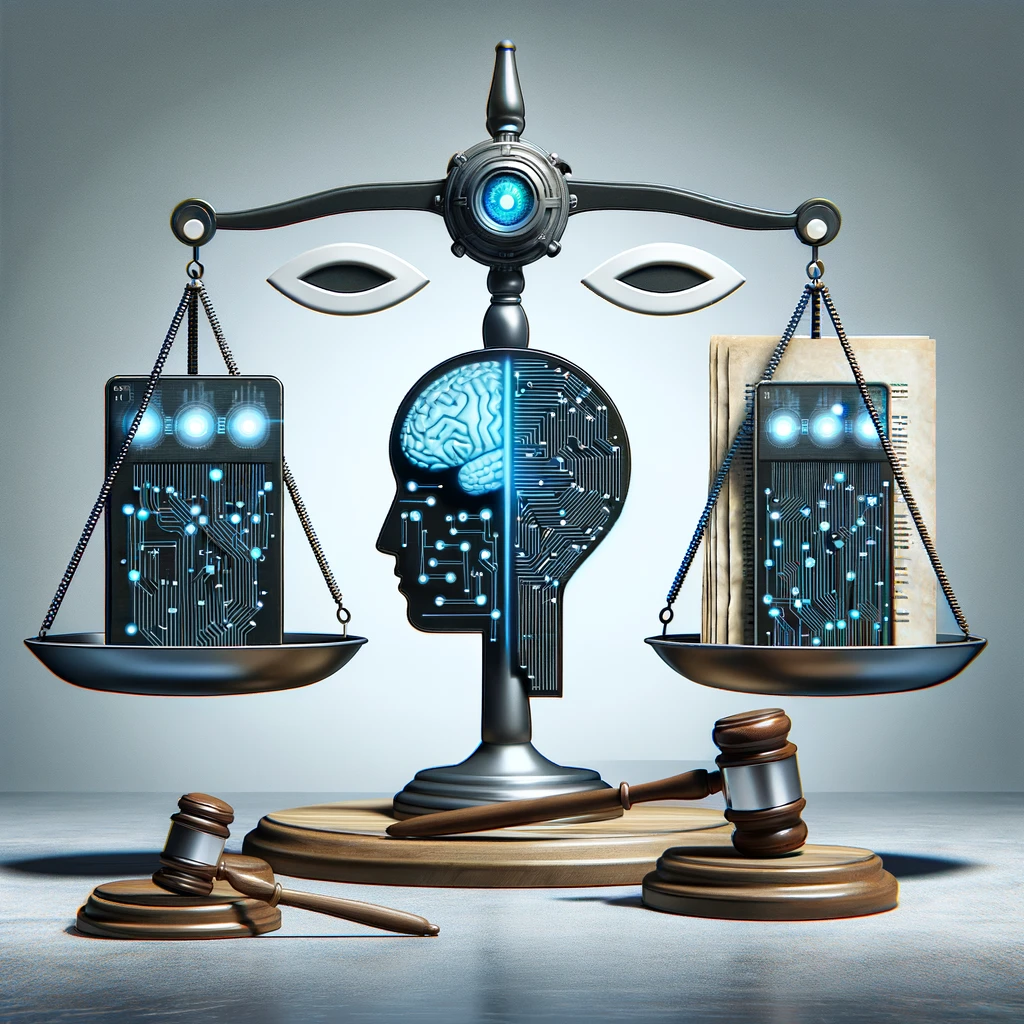
Not a lawless area:
Although we currently do not have legislation that specifically regulates the development and use of artificial intelligence, this does not mean that this is a lawless area. We have several laws that set the framework for how we can develop and use artificial intelligence: If artificial intelligence is to be used to process personal data, the requirements of the General Data Protection Regulation will apply. Among other things, the GDPR requires transparency—where the data subject has the right to relevant information about the underlying logic, as well as the significance and expected consequences of such processing, in the event of automated decision-making. This requirement will be difficult to comply with if we cannot explain how the artificial intelligence system arrives at a given result.
Similarly, it will be difficult to provide justifications for individual decisions that refer to the factual circumstances on which a decision is based, in accordance with Section 25 of the Public Administration Act, if we do not understand how the model works, which factors are given weight in the decision-making process, and how these factors have led to the outcome. We also have anti-discrimination protections under the Equality and Anti-Discrimination Act, which is intended to promote equality and prevent discrimination in Norwegian society. Since artificial intelligence is often trained on large datasets, it is important to be aware of biases in the data the model is trained on. Historical biases or errors in data collection can cause the model to make decisions on the wrong basis, and thus act in a discriminatory manner. We also have rules for the protection of intellectual property rights, such as copyright. Issues related to copyright may arise both in connection with the training of artificial intelligence and in the use of the material generated by the artificial intelligence.
As noted above, we already have legislation that sets clear guidelines for how we can develop and deploy artificial intelligence, even though these do not directly address the unique challenges associated with AI systems. We look forward to following these developments closely, both in terms of the benefits that artificial intelligence can bring and the developments in the legal sphere.