Innledning
I dette og neste blogginnlegg vil jeg skrive om prinsipper, metoder og verktøy for å generere tekster. Jeg skriver med fokus på det å sende noen et brev for å informere om noe. Det kan være et vedtak fattet i offentlig forvaltning, eller brev til bank-kunder med informasjon om nye rentesatser, eller andre ting. Dette er egentlig helt generelt, og handler om hvordan du kan generere en tekst. Om det er i A4-format som sendes som PDF eller papir, tekst i epost, sms eller annet har ikke noe å si. For enkelhets skyld tar jeg utgangspunkt i det å sende et vedtaksbrev i PDF-format for å informere om en beslutning.
Det jeg beskriver i dette blogginnlegget er ikke noe jeg har funnet på alene. Dette er i stor grad konkrete ting som er laget i programmet Fremtidens innkreving i Skatteetaten, men det er også generelle prinsipper og metoder. Jeg skriver om dette for å informere om noe jeg synes er smart som kanskje andre kan ha nytte av.
Helheten av det jeg beskriver vil nok være mest aktuelt for store organisasjoner, men noen deler kan være aktuelle selv for små organisasjoner.
Prinsipper for skriftlig kommunikasjon
Her beskriver jeg noen prinsipper som ligger til grunn for metoder og verktøy som jeg beskriver senere. Det meste kommer av hvordan Skatteetaten ønsker å kommunisere i sine brev og fremstå utad. Jeg tror det er relativt generelle prinsipper, som noen vil være enig i og andre kan være uenig i. Ulike organisasjoner kan ha ulike behov og ønsker, så du må vurdere hvilke av disse som er aktuelle for deg og din organisasjon.
- Innholdet skal være korrekt. Det skal være godkjent av fageksperter, fagansvarlige, jurister eller andre.
- Innholdet skal være klarspråklig for at alle mottakere skal forstå budskapet. Det skal vurderes av noen med klarspråkskompetanse.
- Vi skal ha lik kommunikasjon utad for å oppfattes enhetlig:
Noe innhold skal være likt på tvers av fagområder. F.eks. hvis du har et avsnitt i slutten av brevet som sier «Har du spørsmål? Kontakt oss på denne måten: …» så skal det være likt i alle brev der du vil ha med en slik tekst.
Innholdet skal ha felles form på tvers av fagområder. F.eks. bør vedtaksbrev fra en del av organisasjonen likne på vedtaksbrev fra en annen del av organisasjonen. Dette kan f.eks. være rekkefølgen på avsnittene «Relevante regler i dette brevet», «Har du spørsmål?» og «Signatur».
Brev med i prinsippet samme innhold skal være like. Hvis en saksbehandler jobber med en sak og innvilger en søknad, og en annen saksbehandler innvilger en annen søknad bør begge innvilgelsesbrevene være like (med unntak for det som faktisk er spesifikt for hver sak).
- Noe innhold skal presenteres på flere språkformer, f.eks. på bokmål, nynorsk og engelsk fordi mottakere ønsker det. I så fall skal tekstene vurderes/skrives av noen som er kompetente på de språkformene.
- Brev som kan genereres automatisk skal genereres automatisk. Dette sparer tid i saksbehandlingen, gir like brev og gjør at vi raskere kan sende ut brev når noe skjer. F.eks. hvis vi har en automatisk saksbehandlingsprosess er det fint hvis du kan sende vedtaksbrevet med en gang i stedet for å måtte be en menneskelig saksbehandler om å sette seg inn i saken og skrive et brev som formidler resultatet.
Disse prinsippene kan fravikes når det er gode grunner for det.
En mulig innvending mot prinsippene ovenfor er at det leder til sentralisering av brev og tekst i organisasjonen. Det kan føre til at det tar lenger tid å opprette nye brev eller endre eksisterende brev. Det er sant at det kan skje, men det er ikke sant at det må skje. Det må også veies opp mot hvor viktige disse prinsippene er for organisasjonen, så du kan ende med ulike grader av sentralisering. Vi skal videre se på metoder og verktøy som kan brukes på ulike måter avhengig av hvor mye vekt du legger på de ulike behovene og ønskene over.
Fraselager
En måte å oppnå flere av behovene og ønskene over er å ha et sted der alle tekster til brev lagres. Jeg bruker ordet fraselager, der en frase er en tekst. Det kan være en setning eller et helt avsnitt, men er aldri mindre enn én setning. En frase vil ha en viss formatering, og kan inneholde overskrifter, lister med kulepunkter osv.
Jeg forutsetter at et brev skrevet på bokmål, nynorsk eller engelsk kan struktureres på samme måte og oversettes avsnitt for avsnitt eller til og med setning for setning. Du må tenke på helheten i teksten, men jeg tror det er mulig å si at en viss setning eller et avsnitt på bokmål kan være ekvivalent til en setning eller et avsnitt på engelsk. Det kan finnes unntak, og de kan håndteres, men dette er hovedregelen.
Vi kan lage et enkelt fraselager slik:
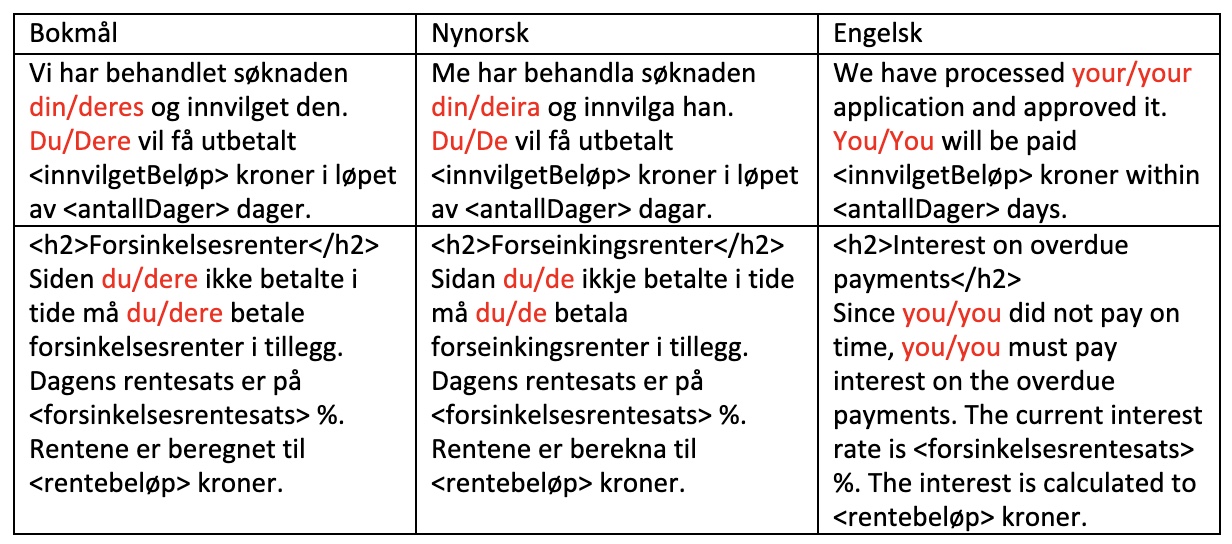
Her har vi formatert teksten mellom <h2> og </h2> som overskrift nivå 2. Vi kunne også hatt fet, kursiv, ulike skriftstørrelser osv. Der det er rød skrift på entall/flertall som f.eks. du/dere kan styres av f.eks. om du skriver brev til en person eller en organisasjon. Feltene <forsinkelsesrentesats> og <rentebeløp> skal fylles ut med konkrete tall i hvert enkelt brev. Vi kaller slike felt «flettefelt», for å vise at her skal det flettes inn noe i setningene.
Dersom du har en slik liste over tekster kan du be alle som skal skrive nye tekster om å bruke tekstene hvis de kan. Nye brev kan skrives ved å plukke noen eksisterende tekster og lage noen nye. Du får likere tekster og likere kommunikasjon, og kan spare tid på å formulere egne tekster og ta dem gjennom juridisk godkjenning. Du slipper å oversette samme tekst mellom bokmål, nynorsk og engelsk flere ganger, fordi alle kan bruke samme oversettelse.
En slik liste kan bli uoversiktlig, så vi kan legge til noen identifikatorer. I tabellen under er det kolonnene «Nivå 1», «Nivå 2» og «Nivå 3»:

Disse identifikatorene kan brukes til å filtrere og sortere listen, og de kan brukes til å bygge opp en brevmal med ulike fraser. Dette kommer jeg nærmere tilbake til i neste blogginnlegg.
Vi kan også ønske å ha lovhenvisninger i brevene våre. F.eks. kan det være slik at hver gang vi skriver om forsinkelsesrenter ønsker vi å henvise til en viss paragraf i en viss lov. Det er positivt om ikke alle må finne ut selv hvilken paragraf de skal henvise til, f.eks. om det er «forsinkelsesrenteloven §§ 14 og 15» eller om det er «forsinkelsesrenteloven kap 3». Det er også fint om alle som skal henvise til dette gjør det på samme måte, altså at de bare har én av følgende: «vår rett til å beregne forsinkelsesrenter, se forsinkelsesrenteloven §§ 14 og 15», eller «for info om hvorfor vi beregner forsinkelsesrenter kan du se §§ 14 og 15 i forsinkelsesrenteloven». Hvis du lager dette en gang for alle, får du likt uttrykk, og alle nye brukere av samme tekst slipper å tenke over hvordan det skal se ut. En måte å gjøre det på er å knytte enkelte lovhenvisninger til enkelte fraser. Jeg fjerner nå nynorsk og engelsk for at tabellen ikke skal bli for bred.
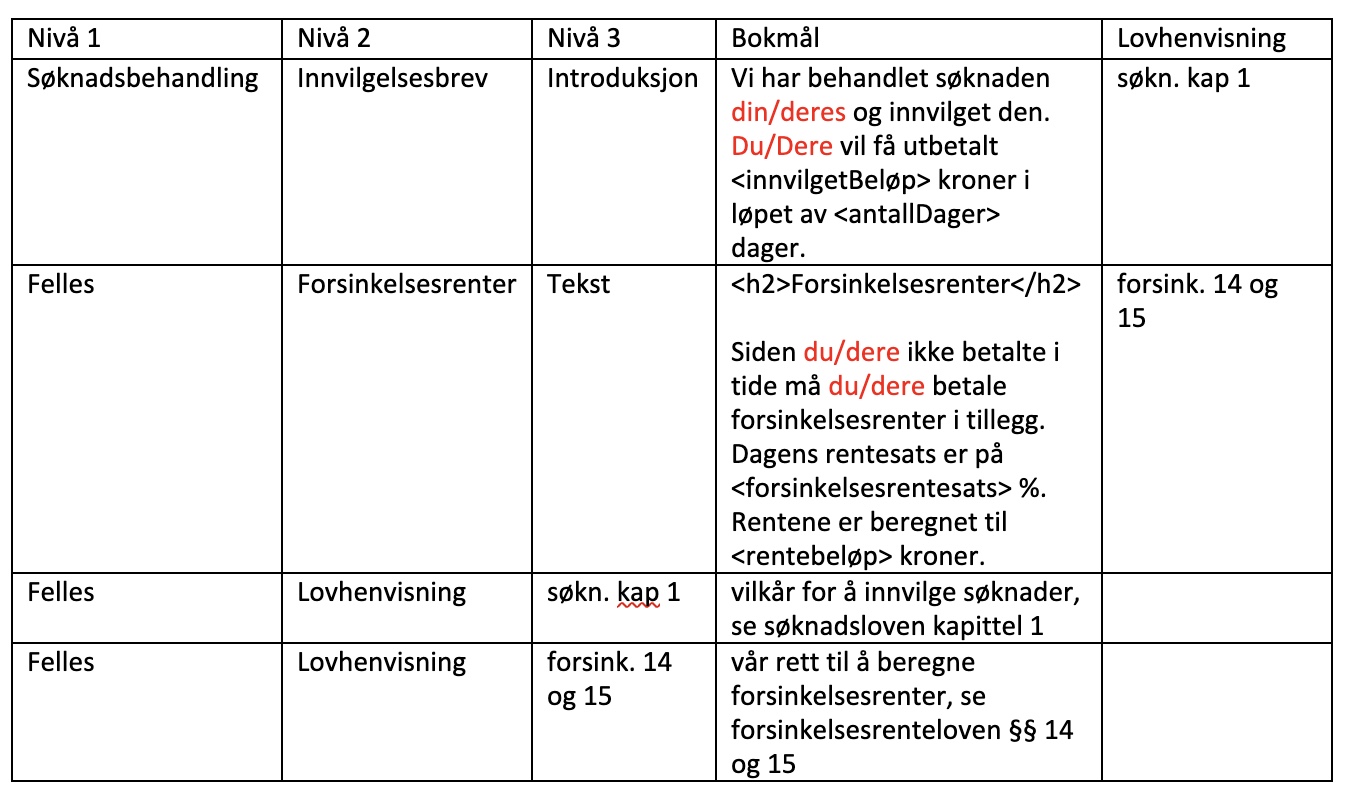
På denne måten vil alle brev som har frasen felles/forsinkelsesrenter/tekst få med seg samme lovhenvisning i brevet. Slike lovhenvisninger kan listes opp i en egen del av brevet under en overskrift som f.eks. «Relevante regler for dette brevet».
For å lage et nytt brev kan du gjøre følgende:
- Finn ut hva som må være med i brevet for å tilfredsstille lovkrav.
- Tenk over hva annet du vil ha med
- Tenk over omtrent hvordan du vil skrive og strukturere brevet, men ikke for detaljert.
- Se gjennom fraselageret for å finne passende tekster, spesielt under «felles».
- Skriv eventuelt nye tekster du trenger som ikke allerede er i fraselageret.
- Nye tekster skal legges inn i fraselageret. Alt innhold i alle brev skal være der.
Alt dette kan faktisk brukes til å lage brevmaler som du deler ut til saksbehandlerne for manuell brevskriving, men en viktig fordel kommer når det brukes til å generere brev automatisk. Dette skal vi se nærmere på i neste innlegg på fagbloggen. Her kan du lese del 2.